What did you practise last month? Did it work?

The slowdown that remembers.

Loop any YouTube video or your own recording, slow it down, and watch yourself climb back to full speed — week after week. Every video remembers exactly how you practised it.

Runs in any browser — the phone, tablet or laptop you already practise with. Nothing to install.

Lifetime
7h 38m
Songs
24
7 days
4h 22m
Practice Stairway
last 12 days
Each step is one day's climb.
Tier = practice time (W/M use daily average): 5m10m30m1h2h rest day
Today by category
Guitar Lessons38m
Fun Practice7m
My Library3m

Tap any bar to see that day — or switch to M for the month.

Set the loop once. Never set it again.

Drag two handles around the phrase that keeps beating you, drop the speed until you can play it, and save it. Next time the video opens right there, at that speed — because the app kept it, not because you remembered. Name five and Review starts picking them back up for you, the ones you've drifted from first.
Click anywhere on the demo.
What you can adjust
Loop — Build, then Grind
Mark a start and end to frame any section. Build roams free; Grind locks the playhead inside.
Speed — 0.25× to 2×
Fine steps near 1×, pitch kept correct so slow practice still sounds right.
Auto speed-up
Set the loops before each step-up and the speed it adds — it climbs for you while you play, and stops at 1×.
Named loops
Save Intro, Bridge, Chorus — one tap to jump between the sections of a song.
Mirror & stats
Flip the video to match a mirror, and open per-section stats any time.
Keyboard shortcuts
Space, ← →, and I / O to mark the loop ends — it feels like a practice tool, not a video player.
WHAT THE RECORD LOOKS LIKE

Where the time actually went,
on this one song.

Every time you change the speed, this song's own record notes it — how long at 0.7×, how long at 0.75×, and which sections you spent it on. Drag the slider yourself, or let Auto speed-up do the changing while you play. Either way, whether the section you keep drilling actually got easier is something you can check, not something you feel — which is what a practice tracker is for, once it fills itself in.

  • Saved loops — the exact sections of the song you work on.
  • Speed stairway — time spent at every tempo, tier by tier.
  • Spots & medals — where your time went, and the tier you earned.
Click anywhere on the demo.

A day, a week or a month — in one picture.

Two kinds of sharing, never mixed up. Post a day, a week or a month as a recap image — your time, your climb, and every song at the speed you actually played it. Or send one person one loop, at the speed you've been drilling it. Nothing else leaves your account.

Share a day, week or month

Tap a bar on your practice stairway to open that day, week or month, then “Share image”: a portrait to post with your time, your climb, and every song at the speed you played it.

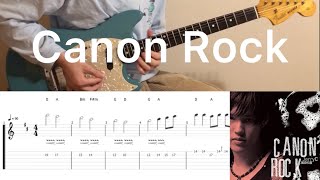
Daily recap. Thu, May 28. 41 min. 4 songs, best day this week. Biggest climb: Canon Rock, 0.7× to 0.9×. Canon Rock, 12 min; Stairway intro, 9 min; Fantaisie-Impromptu, 7 min.

Send one loop. Their record starts on it.

Save a loop, tap Share, send the link — that part needs a free account. It opens on that exact section, at the speed you set, on their phone, with no account and nothing to install.

Teaching with it? A link like this is how your students find your content.

Click anywhere on the demo.
Quick Jam · Free

No video? Play over chords. It still counts.

Pick a progression, switch major to minor, choose a style, set the tempo — the chords below repaint as you change them. In the app a band plays it back, free, with no video needed at all: a backing track built from the chords you typed. And the minutes land on your daily stairway with everything else.

Quick Jam beta

Set a key, tap a progression, hit play — the band jams the loop.

Key
Quick starts
Customize
Tempo
bpm
Auto speed-up
Gradually speeds up while you play.

Drop in a video — or an audio file.

A lesson you filmed, a rehearsal, a backing track off your device — video or audio, looped and slowed with the same tools. Adding your own files needs a free account. Bring audio in and its waveform comes with it, still free, so you can line a loop edge up right on the beat.

Drop a video or audio file
or tap to browse — sort it into a folder while you're at it

Stays on this device by default — the file only goes to the cloud if you mirror it to your account (Pro), or ask Solo to separate it.

The same loop-and-slow mechanic works for any motor skill
Guitar Piano Dance Drums Violin Bass Voice + anything you can record
Solo + Play along · Pro

Solo a track — or mute one and play along

Split a song into its six tracks. Solo one to study it note-for-note, or mute one and play along with the rest of the band — looped, slowed, in sync with the video. On songs you upload — here is how a play-along track gets made.

Isolate or play along
×

Solo — hear one on its own. Play along — mute one and play with the rest. One at a time.

🎼Full mix (original)
VocalsSoloPlay along
DrumsSoloPlay along
BassSoloPlay along
Guitar betaSoloPlay along
Piano betaSoloPlay along
OtherSoloPlay along

Guitar & piano are experimental — they separate less cleanly than vocals, drums & bass.

Download currentDownload all 6
Study a part note for note
Solo the bass to learn the line, or the drums to lock your timing — nothing else in the way.
Play along with the band
Mute your own instrument and play along with the rest — looped and slowed, on the song's own timeline, so a loop on bar 33 is bar 33 on every track. Nothing to line up by hand.
One separation, all six tracks
Split a song once — every solo track stays ready, and any one is downloadable as an MP3 for offline practice.

Works on files you upload — not YouTube, where the audio never reaches us. Separating one sends it to the cloud.

What's free, and what isn't

Almost all of it is free, and not as a trial — it doesn't expire. Signing up is free too; it's what stops your practice history living in one browser.

Guest no account Free sign up, free Pro $6/month
Loop + slow down YouTube videos
Loops saved between visits
Automatic practice log
Per-song speed chart
Spaced review
Jam over chords
Shareable recap image
YouTube videos 100 100 Unlimited
History survives a new device
Create practice links to share
Local video / audio files 100, one device Unlimited
Cloud storage for uploads 50 GB
AI separation (your uploads) 15/month
Deeper insights

Create a free account

Or keep going as a guest — Pro only ever appears in-app, when you reach for something it adds.

FAQ

Do I need an account?
No — open the app and start practising as a guest. Your library and practice history live in your browser (IndexedDB), which means the browser can also clear them: private mode, a storage sweep, or “clear site data” takes the lot, and we cannot stop it or get it back. Signing up is free and moves your library, your loops and your practice history to your account, where clearing the browser no longer loses them.
Why not just use YouTube's built-in loop?
YouTube's loop is one coarse region, and it resets when you close the tab — so tomorrow you find the passage again, drag it again, set the speed again. Ours is saved with the video: named loops (intro, bridge, chorus — one tap to switch), the speed you left it at, Auto speed-up from slow back to full, and per-section stats that say the hard run took 45 minutes and climbed from 0.7× to 0.9×. The difference is not the loop. It is that the loop is still there next week — and once you have named a few, Review puts them back in front of you on a rotation, so you are not deciding what to practise from scratch every time. If you are still weighing tools, we keep a longer comparison of YouTube loopers — ours included.
What can I practise with it?
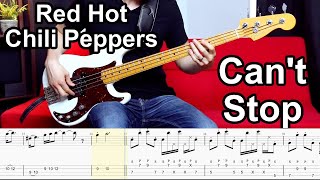
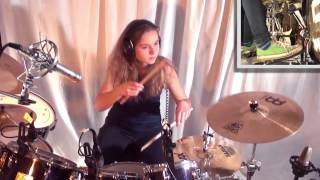
Anything you would rehearse by repeating it. A piano scale, a dance 8-count, a vocal phrase, a drum fill, a language-shadowing drill — the player, the loop controls, Auto speed-up and Stairway Stats neither know nor care what is in the video. The “Examples” set that ships with every new account runs from a Chopin impromptu to a drum cover to a dance routine, to make that concrete. And you do not need a video at all: time spent playing over chords in Quick Jam lands in the same record.
Do you download YouTube videos?
No. Practice happens inside YouTube's own player, on the original video — we never receive or touch its audio. That is also why isolating the bass or drums works only on files you upload: for a YouTube video, the audio never reaches us in the first place.
Is my practice data private?
Yes. There's no public feed, no leaderboard, no streak-pressure social. Friends only ever see what you explicitly send — a single practice loop, or a recap you choose to post. Never your whole history by default. We never host your videos publicly — there is no shared library, no scraping, and nothing of yours is browsable, searchable or listed anywhere. Only what you deliberately share has a link. See our Privacy Policy.
What does it cost?
Open the app free — no signup. Sign up (also free) for cross-device sync and all the practice tools. Pro is $6/month or $58/year and unlocks power features like splitting a song into tracks to Solo one instrument or play along with the rest, and cloud-mirroring your own uploads (record a lesson, keep it on every device); the upgrade only ever appears in-app when you reach for what it adds, and you can cancel any time.
Does my library follow me between devices?
Sign up — it's free — and your practice history follows you from laptop to phone to tablet, even for videos that never leave this device. Your YouTube videos come with it. A file off your device stays on that device until you sync that one, and cloud storage for uploads is a Pro feature.
Will I still see YouTube ads?
We don't block them — and if you have Premium, your ad-free YouTube carries over in the same browser.
Does it work on mobile?
Yes — and the phone layout is built for the phone rather than shrunk to fit it. The loop is a two-thumb slider, panels stack instead of squeezing, and you can install it to the home screen so it opens like an app. A tablet or laptop gives you more room; a phone on the music stand is a first-class place to practise.

The loop is the easy part. The record is the reason.

The loop, the practice log, the review and the recap stay free. But a record only means something once it has had time to build — and as a guest, yours lives in this browser alone. Thirty seconds of signing up is what carries it to the next device.

Start practising No signup · free